Key Takeaways
- Specialized foam fire suppression protects areas with flammable liquid hazards by combining foam concentrate with water, and it is a separate discipline from standard sprinkler work.
- Knowing whether a provider handles foam design review, installation, inspection and service in-house helps you judge how well your system is covered.
- ProTech Fire has focused on fire sprinkler and specialized foam system installation and service since 1996, with NICET-certified staff and a same-day response commitment on service calls.
Does your current fire protection provider actually service foam suppression systems, or just install them? If you manage a building with flammable liquid hazards and you’re researching specialized foam fire suppression providers in Atlanta, that question is a good place to start.
Foam suppression protects areas where fuel, solvents or similar liquids could burn. It works differently from a standard sprinkler system and requires different skills to maintain. ProTech Fire installs and services both sprinkler and specialized foam systems. This page explains what foam suppression is, when a facility may need it, and which questions help you judge any provider’s real capability. To talk through your facility, contact the ProTech Fire team by phone or text.
What Is Specialized Foam Fire Suppression?
A System Built for Flammable Liquid Fires
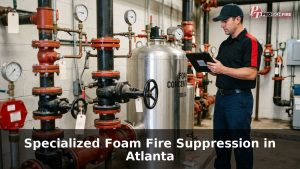
Specialized foam fire suppression is a fixed fire protection system that discharges a mixture of water and foam concentrate. The foam spreads across the surface of a burning liquid and forms a blanket that keeps flammable vapors from escaping [1]. That blanket is the key difference from a system that only discharges water.
Foam systems are used where a fire would involve liquid fuels or chemicals. They are not a replacement for sprinklers in an office or a warehouse of ordinary goods. They are a targeted answer to a specific hazard.
The Parts That Make a Foam System Different
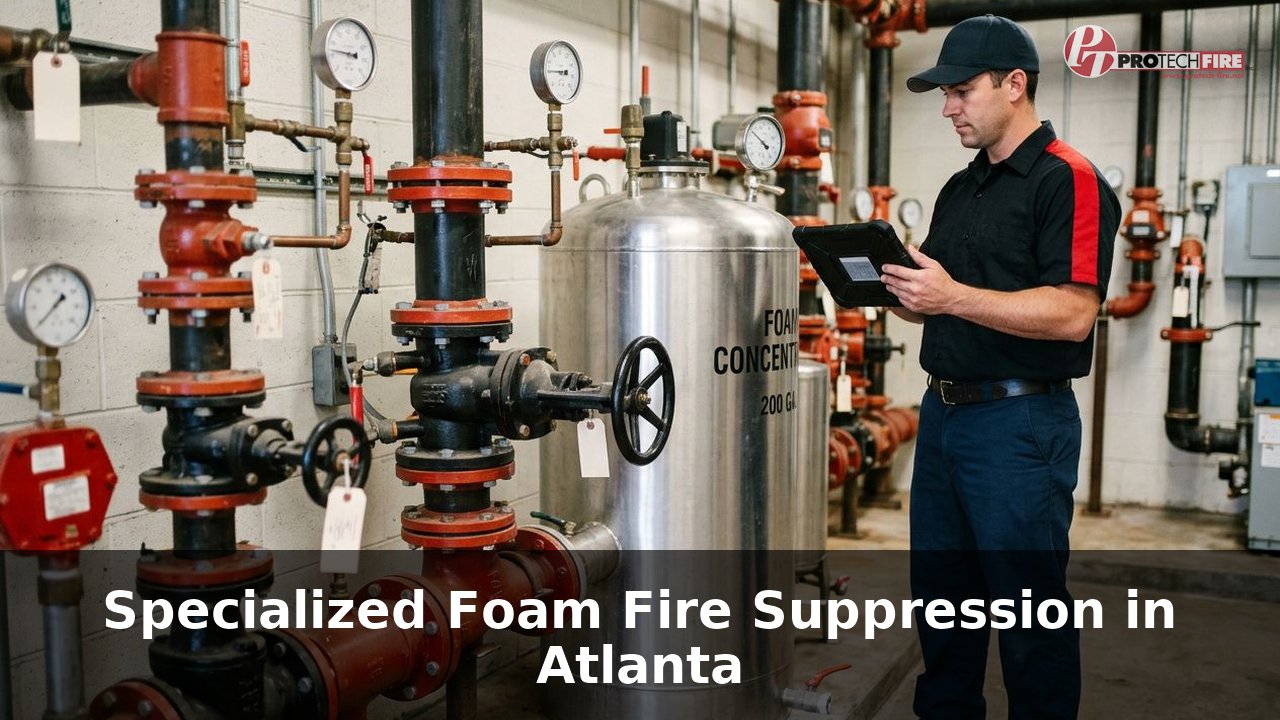
A foam system needs the same basics as other fixed systems: piping, valves and a water supply. It adds components that a plain sprinkler system does not have:
- A foam concentrate supply, usually held in a tank
- Equipment that proportions the concentrate into the water stream
- Discharge devices suited to the hazard being protected
- Controls and valves that must be tested and documented
Each added part is another item that needs inspection, testing and care over the life of the system.
Why Specialization Matters
Because foam work has its own components and its own maintenance needs, it is a distinct technical service. A contractor who is excellent at sprinkler work may or may not perform foam work with its own trained staff. Paul Johnson founded ProTech Fire in 1996 to focus on fire sprinkler and specialized foam system installation and service, so foam is a named part of what we do, not an add-on.
At a glance
Foam, and when you need it
What specialized foam fire suppression is and how to evaluate a provider.
When Does a Facility Need Foam Suppression Instead of Standard Sprinklers?
Facilities With Flammable Liquid Hazards
Foam suppression is typically considered where flammable liquids, fuels or certain chemicals are stored, handled or processed. Water alone may not control a fire fed by that kind of fuel. The GAO notes that foam has been considered the most effective product for suppressing jet fuel fires [1]. That example comes from military aviation, but the principle applies to fuel hazards in many settings.
Facilities that often fall into this conversation include:
- Fuel storage and dispensing areas
- Chemical or solvent storage rooms
- Industrial processes that use flammable liquids
- Hangars and similar aviation facilities
- Loading and transfer areas for liquid fuels
How the Hazard Gets Classified
Whether a space needs foam depends on the specific hazard, the quantity and type of liquid, the building layout and the requirements set by your local fire official and insurer. No general article can settle that for your building. A qualified fire protection professional should review your space and the applicable codes.
Signs Your Current Coverage Deserves a Second Look
You don’t need to assume a problem to ask good questions. It is reasonable to review your setup if any of these apply:
- You have a foam system but can’t say who last serviced the concentrate and proportioning equipment
- Your service reports list sprinkler items but say little about foam components
- Your use of flammable liquids has changed since the system was installed
- You aren’t sure whether your provider performs foam work with its own staff or sends it out
How Foam Suppression Differs From Standard Fire Sprinkler Systems
Water Only Versus Water Plus Concentrate
A standard wet-pipe sprinkler system keeps water in its pipes and discharges water when a sprinkler head activates. A foam system mixes foam concentrate with water so the discharge can blanket certain fuel-based fires. That mixing step is where much of the added complexity lives.
Different Design and Maintenance Needs
The extra components change what a technician has to know. Foam systems call for knowledge of concentrate handling, proportioning equipment and discharge devices. They need inspection routines that a water-only system does not. Concentrate also has to be kept in a condition suited to the system. Ask any provider how they approach these items on your specific equipment.
Why This Matters When You Choose a Provider
A company can list “fire protection” and still offer a narrow range of work. Foam suppression is where the difference between installing a system and servicing it over time becomes visible. When a foam system has been in place for years, the person who tests it should understand how it was built to work. ProTech Fire pairs sprinkler experience with specialized foam system service, so one team can look at both parts of a facility’s protection.
What to Ask When Evaluating a Foam Suppression Provider
Questions About Who Does the Work
Start with the plainest questions and listen for specific answers:
- Is foam system installation, inspection and service performed by your own employees, or by a subcontractor?
- Which of your technicians hold NICET certification, and in which fire protection specialty?
- How many foam systems are you currently servicing, and of what type?
- Who will be on site, and can I reach that person directly?
NICET stands for the National Institute for Certification in Engineering Technologies, which offers certification programs for fire protection technicians. A certification doesn’t replace a review of the actual work, but it gives you a concrete item to verify.
Questions About Response and Accountability
A foam system that is out of service leaves a hazard area with reduced protection, so response time matters. Ask how quickly a provider responds to service calls and what that commitment covers. ProTech Fire has a same-day response commitment on service calls, and you should ask any provider, including us, to explain exactly how it applies. Ask who owns the relationship, too. Some customers prefer a direct line to a local team, while others are comfortable with a larger organization’s layers.
Questions About Documentation
Good records make compliance reviews easier. Ask what an inspection report from the provider looks like and whether it covers foam components by name. Ask how deficiencies are communicated and how follow-up work is scheduled.
A Fair Way to Review Your Current Vendor
Use these questions as a checklist, not an accusation. Many providers will answer them well. If some answers are unclear, that tells you what to ask next, and a short conversation with a second provider can help you compare.
Keeping Your Foam System Compliant and Service-Ready
Inspection, Testing and Records
A foam system stays reliable when it is inspected and tested on a schedule that matches your applicable codes and your local fire official’s requirements. Keep reports organized so you can show what was tested, when and by whom. Your insurer may ask for them as well. Your provider can tell you which intervals apply to your equipment.
Concentrate and Equipment Care
Foam concentrate is a working part of the system, not a one-time purchase. Ask your technician how the concentrate is checked, how its condition is documented and what happens when it needs replacement. That conversation is also a good time to ask which type of concentrate your system uses, since foam chemistry is changing. The GAO reported that the Defense Department is transitioning away from PFAS-containing foam, and that some fluorine-free foams are not drop-in replacements for certain systems [1]. That report concerns military installations, but it shows why you should know what is in your own system.
Planning Ahead for 2026 and Beyond
Changes to your facility affect your protection. If you add storage, change processes or alter a layout in 2026, ask your provider whether the foam system still matches the hazard. Reviewing it before a change is simpler than adjusting afterward.
Next Step With ProTech Fire
If you’d like a second opinion on a foam system, or you need a provider for a new one, our team at ProTech Fire is ready to talk through your facility and your questions. We serve Atlanta-area facilities, and you can start by calling or texting us.
FAQ
What types of commercial facilities typically need foam fire suppression instead of standard sprinklers?
Facilities that store or handle flammable liquids, fuel or certain chemicals often need foam suppression because water alone may not control that type of fire. Examples include fuel storage areas, chemical storage rooms and aviation facilities. Whether your building needs it depends on your specific hazard classification, so a qualified fire protection professional should assess the space.
What’s the practical difference between a foam suppression system and a standard sprinkler system?
A foam system mixes foam concentrate with water to blanket certain fuel-based fires, while a standard wet-pipe sprinkler system discharges water only. That adds components such as a concentrate supply and proportioning equipment, which need their own design knowledge, inspection and upkeep. When comparing providers, ask who performs foam work with their own staff and how they document it.
What should I ask when evaluating a provider for foam suppression system work?
Ask whether foam installation, inspection and service are performed in-house, whether the technicians are NICET-certified, and how quickly the company responds to service calls. Ask whether foam work is a core offering or subcontracted, and what their inspection reports cover. Clear, specific answers are a good sign, and unclear ones tell you what to follow up on.
Does ProTech Fire install and service specialized foam suppression systems for Atlanta facilities?
Yes. ProTech Fire has focused on fire sprinkler and specialized foam system installation and service since its founding in 1996, with NICET-certified staff and a same-day response commitment on service calls. Contact our team to discuss your facility and the system you have or need.
Are PFAS-free foams changing what facilities should ask about foam concentrate?
They can be a reason to ask. The GAO reported that the Defense Department must move away from firefighting foam that contains PFAS, and that some fluorine-free foams are not drop-in replacements for certain systems [1]. That report covers military installations, so for your building, ask your provider which concentrate your system uses and how any future change would be evaluated.
Talk With ProTech Fire About Your Foam Suppression System
If you want to confirm who is servicing your foam system, or you need a team to install one, contact ProTech Fire by phone or text and tell us about your facility. We’ll walk through what you have and which questions are worth answering.