Key Takeaways
- This page explains Georgia fire sprinkler inspection requirements for Atlanta facility managers, including who sets the rules, what an inspection program usually covers and how to check your own schedule.
- You get a clear set of questions to ask any fire protection provider about inspection scope, scheduling and documentation, so you can judge your current arrangement on your own terms.
- ProTech Fire is a fire sprinkler and specialized foam system company serving the Atlanta area, and our team can review the scope of your sprinkler and foam systems with you and explain what an inspection program should include.
Do you know whether your fire sprinkler system is being inspected on the schedule Georgia actually requires? Many facility managers assume their provider has it handled. Often nobody has confirmed who owns the schedule, what each visit covers or where the records are kept.
This page walks through Georgia fire sprinkler inspection requirements in plain terms. It shows where the rules come from, what a complete inspection program usually includes and which questions help you check your current setup. ProTech Fire is a fire sprinkler and specialized foam system company serving the Atlanta area, and we wrote this so you can assess any provider against clear criteria, including us. To talk through your building, call or text our team using the contact details on our website.
Why Fire Sprinkler Inspections Matter for Atlanta Facility Managers
A sprinkler system sits quietly for years. Most of the time nobody thinks about it. That is exactly why a scheduled inspection program matters: it is the main way a facility confirms the system is ready on the day it is needed.
Readiness depends on routine checks
Sprinkler systems rely on pipes, valves, gauges and heads that can be affected by age, damage, obstruction or changes in how a space is used. A routine inspection looks for those conditions before they become larger problems. It also creates a dated record that shows the system was reviewed.
Documentation protects the building owner
Inspection records are often what a fire marshal, an insurer or a lease auditor asks to see. A system can be in good condition and still leave you exposed if the paperwork is missing or out of date. Keeping reports organized is part of managing the building, not an afterthought.
Facilities change, and so do needs
Tenant build-outs, storage changes and renovations can alter how a sprinkler system performs. Atlanta facilities with warehouses, offices, restaurants or mixed-use often see these changes over time. A regular inspection gives you a point to flag them and ask whether anything about the system needs attention.
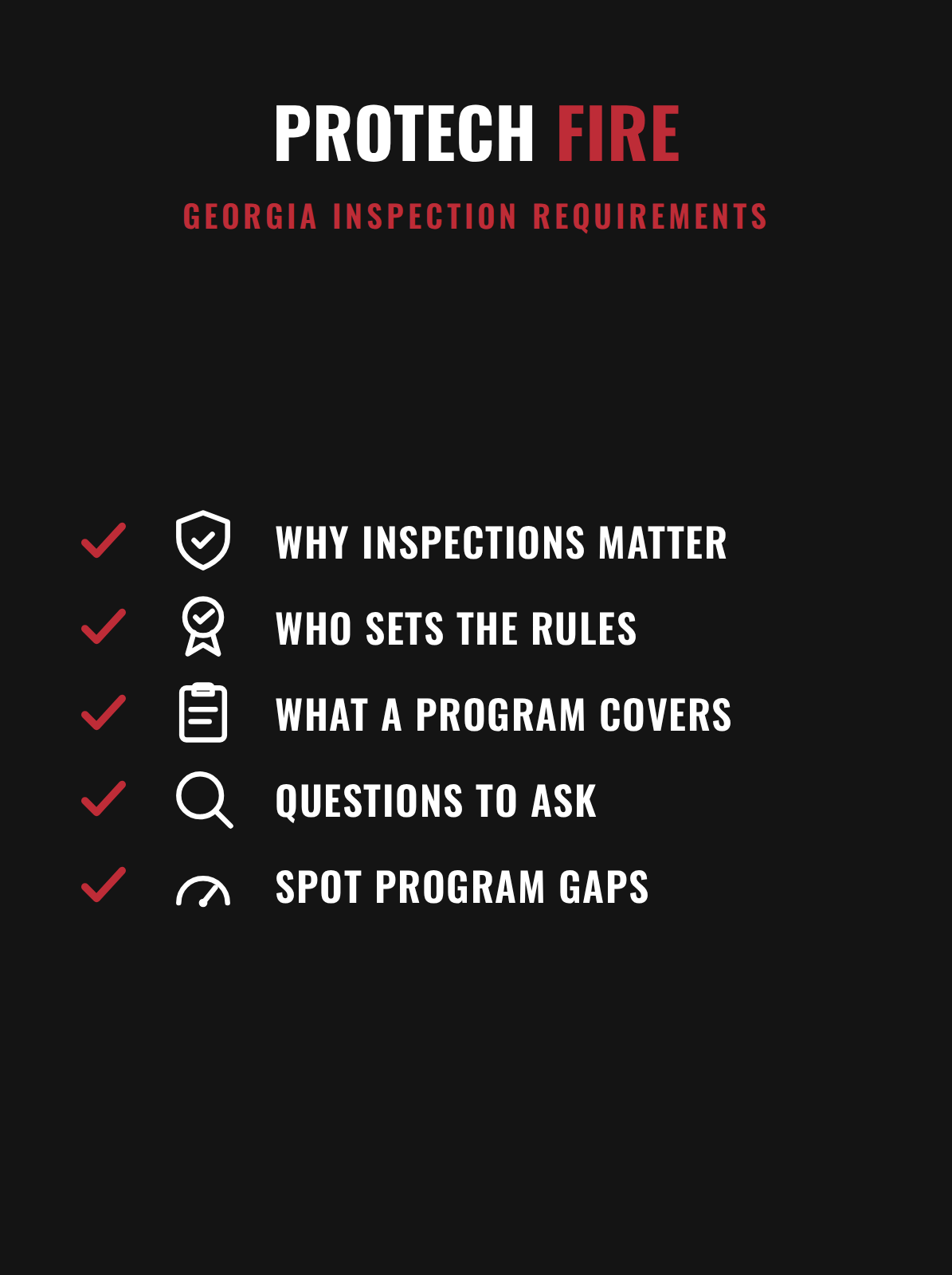
At a glance
What facility managers need
The essentials of Georgia fire sprinkler inspection requirements.
Who Sets Fire Protection Inspection Requirements in Georgia
Requirements do not come from a single document. They come from a combination of state rules, adopted codes and national standards for water-based suppression systems.
State rules and the Georgia fire safety framework
The Georgia Office of the Commissioner of Insurance and Safety Fire publishes rules that cover fire suppression. These include the State Minimum Fire Safety Standards, the rules for enforcement of the Georgia Fire Sprinkler Act, and the rules for installation, inspection, recharging, repairing, servicing and testing of portable fire extinguishers or fire suppression systems. [1] These are the starting point for understanding what applies in Georgia.
National standards and local enforcement
National fire protection standards for water-based systems are generally the technical basis for inspection, testing and maintenance practices. Local fire marshals and building officials in the Atlanta area enforce the adopted rules for individual buildings. The exact frequency and scope for your system depend on the system type, the occupancy and the code edition your jurisdiction has adopted.
Because of that variation, confirm the specifics for your building with the relevant authority or a qualified fire protection contractor rather than relying on a general schedule. Our team can help you identify what questions to bring to that conversation.
Responsibility sits with the owner or manager
Compliance responsibility generally rests with the building owner or facility manager, even when a fire protection company performs the work. That is the gap many people miss. A provider may do excellent work and still not track your due dates unless that has been agreed.
What a Compliant Inspection Program Typically Covers
Scope varies by system, but most programs follow a similar pattern. The list below describes what a typical wet-pipe sprinkler inspection looks at.
Core components reviewed
- Control valves, checked for correct position and condition
- Gauges, checked for readability and expected pressure
- Piping, checked for damage, corrosion or leaks
- Sprinkler heads, checked for damage, paint, loading or obstruction
- Alarm devices and connections, checked for readiness
The goal is to confirm the system is intact and ready to operate. Different system types, such as dry-pipe, pre-action or foam systems, include additional components and different test steps.
Testing, reporting and deficiency follow-up
A complete program does more than look. It records what was found, notes any deficiencies and states what needs to be repaired. You should receive a written report for each visit. If something needs correcting, the report should make clear what it is and who is responsible for the next step.
Fire sprinkler and fire alarm are different systems
A sprinkler inspection covers water-based suppression equipment. A fire alarm inspection covers detection and notification equipment. Many buildings have both, and they are often handled on separate schedules. Confirm which systems each provider actually services so neither falls through the cracks.
Questions to Ask Your Fire Protection Provider About Compliance
Good questions turn a vague sense of “we’re covered” into something you can verify. These apply to your current provider and to any provider you might consider.
Scheduling and responsibility
- Who tracks my inspection due dates, and will you contact me before each one?
- Is that arrangement in writing?
- What happens if a date is missed?
Scope and documentation
- Which systems are included in each visit, and which are not?
- What does the report look like, and how fast do I receive it?
- Where are past inspection records stored, and can I access them at any time?
Response and accountability
- How quickly do you respond to a service request or a deficiency?
- Who do I speak with directly when I call?
At ProTech Fire, we commit to same-day responses for service calls and inspection requests, and our focus on sprinkler and specialized foam systems means you work with a team that does this every day. Whatever provider you use, you should be able to get clear answers to every question above.
How to Tell If Your Current Inspection Program Has Gaps
You do not need to assume anything is wrong. A short self-check will tell you whether your program is solid or needs attention.
A quick self-check
- Find your most recent sprinkler inspection report and note the date.
- Confirm the report lists the systems and components that were reviewed.
- Check whether any deficiencies were noted and whether they were closed out.
- Confirm who is responsible for scheduling the next inspection.
- Make sure fire alarm and any special hazard systems are covered somewhere.
Signs the program may need a closer look
If you cannot locate recent reports, cannot say who owns the schedule or find that deficiencies were never followed up, it is worth a conversation with your provider or a second opinion. Changing providers mid-cycle can raise concerns about records and missed windows, so ask any new provider how it handles inspection history and the transition before you decide.
Taking the next step in 2026
Start with the reports you already have. If they raise questions, our team at ProTech Fire can review the scope of your sprinkler and foam systems with you and explain what an inspection program should include. Reach us by phone or text through the contact details on our website.
FAQ
What does a fire sprinkler inspection in Georgia typically check?
A fire sprinkler inspection generally examines components such as valves, gauges, piping and sprinkler heads for damage or obstruction, and confirms the system is ready to operate. The exact scope varies by system type and the inspection protocol used. Georgia’s fire suppression rules are published by the state, so confirm what applies to your building with the authority having jurisdiction or a qualified contractor. [1]
What should I ask ProTech Fire about Fire alarm inspection versus fire sprinkler inspection?
Ask which of the two systems ProTech Fire services at your building, who is responsible for scheduling each one and what the written report will include. A sprinkler inspection covers water-based suppression equipment, while a fire alarm inspection covers detection and notification equipment, and they are often on separate schedules. Our work centers on fire sprinkler and specialized foam systems, so asking us to explain how your sprinkler inspections fit alongside any alarm work helps avoid gaps.
Who is responsible for scheduling fire protection inspections, the building owner or the service provider?
Compliance responsibility generally rests with the building owner or facility manager, even when a fire protection company performs the inspection. Confirm in writing whether your provider proactively schedules required inspections or expects you to initiate each request. That one answer prevents most missed dates.
Does ProTech Fire handle fire sprinkler inspections for commercial buildings in Atlanta?
ProTech Fire is a fire sprinkler and specialized foam system company serving the Atlanta area, and our team can review your building’s systems and explain what an inspection program should include. Contact us to discuss your building and its systems.
How do I know which Georgia rules apply to my building?
Applicability depends on your system type, occupancy and the codes adopted in your jurisdiction. Georgia publishes its fire suppression rules, including the State Minimum Fire Safety Standards and the rules for enforcement of the Fire Sprinkler Act, through the Office of Commissioner of Insurance and Safety Fire. [1] Your local fire marshal or a qualified contractor can confirm which ones apply to you.
Ask ProTech Fire About Your Sprinkler Inspections
If you want a clear picture of your inspection scope, schedule and records, contact ProTech Fire by phone or text using the number on our website. We will talk through your systems and what a complete program should include.